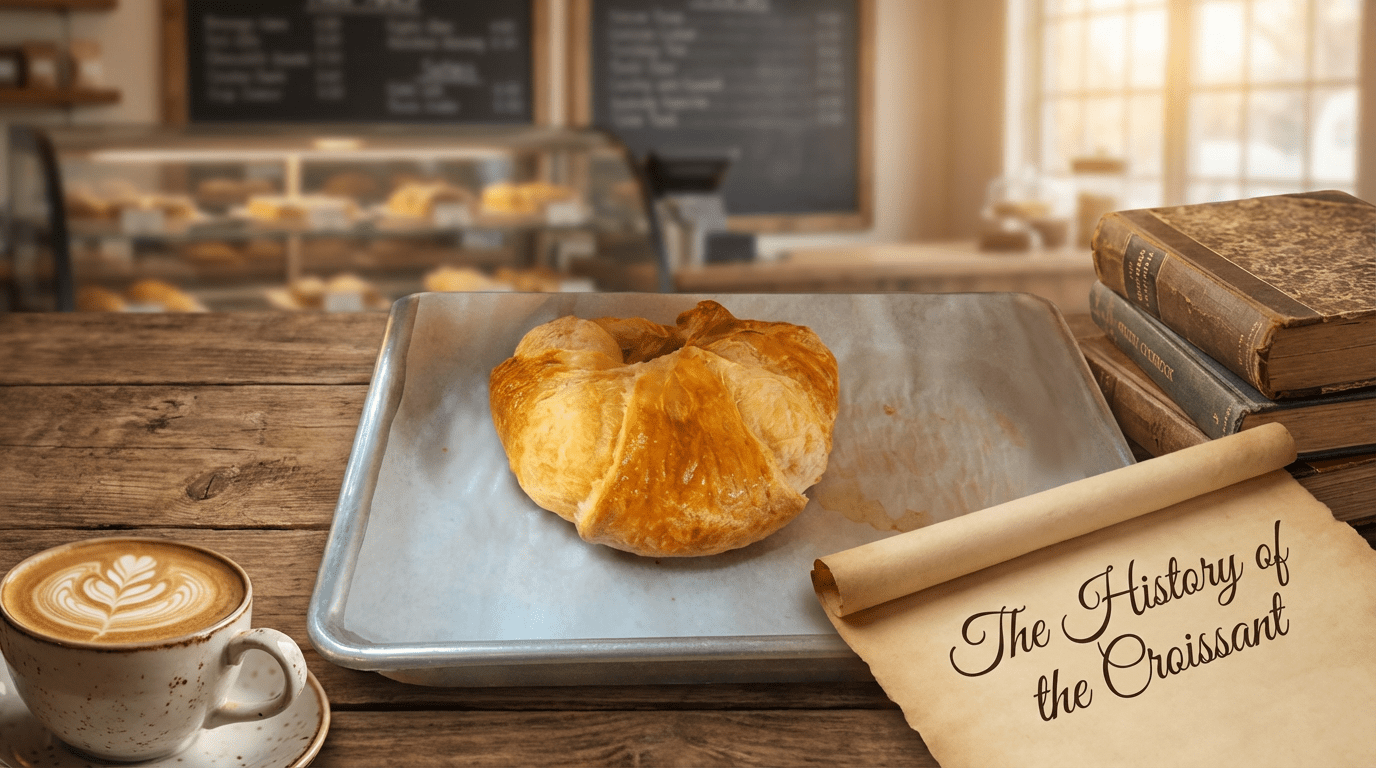

- Historical Origins: The croissant evolved from the 13th-century Austrian “kipferl,” which was brought to Paris in 1838 by August Zang and later transformed into the modern flaky pastry via French lamination techniques in 1915.
- Technical Mastery: True professional croissants require a precise “honeycomb” interior created through meticulous temperature control and “tournage”, the process of folding layers of chilled butter into yeast dough.
- Local Specialities: Celebrations Dothan honors this global history by offering artisan pastries, including their top-rated signature Almond Croissant, which is a local favorite.
- Exclusive Access: Residents can join an exclusive pastry list for first access to seasonal releases, fresh bakes, and behind-the-scenes insights into the bakery’s traditional methods.
Table of Contents
- The Austrian Roots of the Kipferl
- The Evolution of the Modern Laminated Dough
- The Anatomy of Perfection: Our Professional Standard
- Our Delicious Options: The Best in Dothan
- August Zang and the Rise of the Viennese Bakery
- Why Our Almond Croissant is the City’s Top Choice
- Celebrations Dothan: A Local Take on a Global Classic
- Join Our Exclusive Pastry List
- Introduction of the Viennese Bakery in Paris by August Zang
- Frequently Asked Questions
The Austrian Roots of the Kipferl
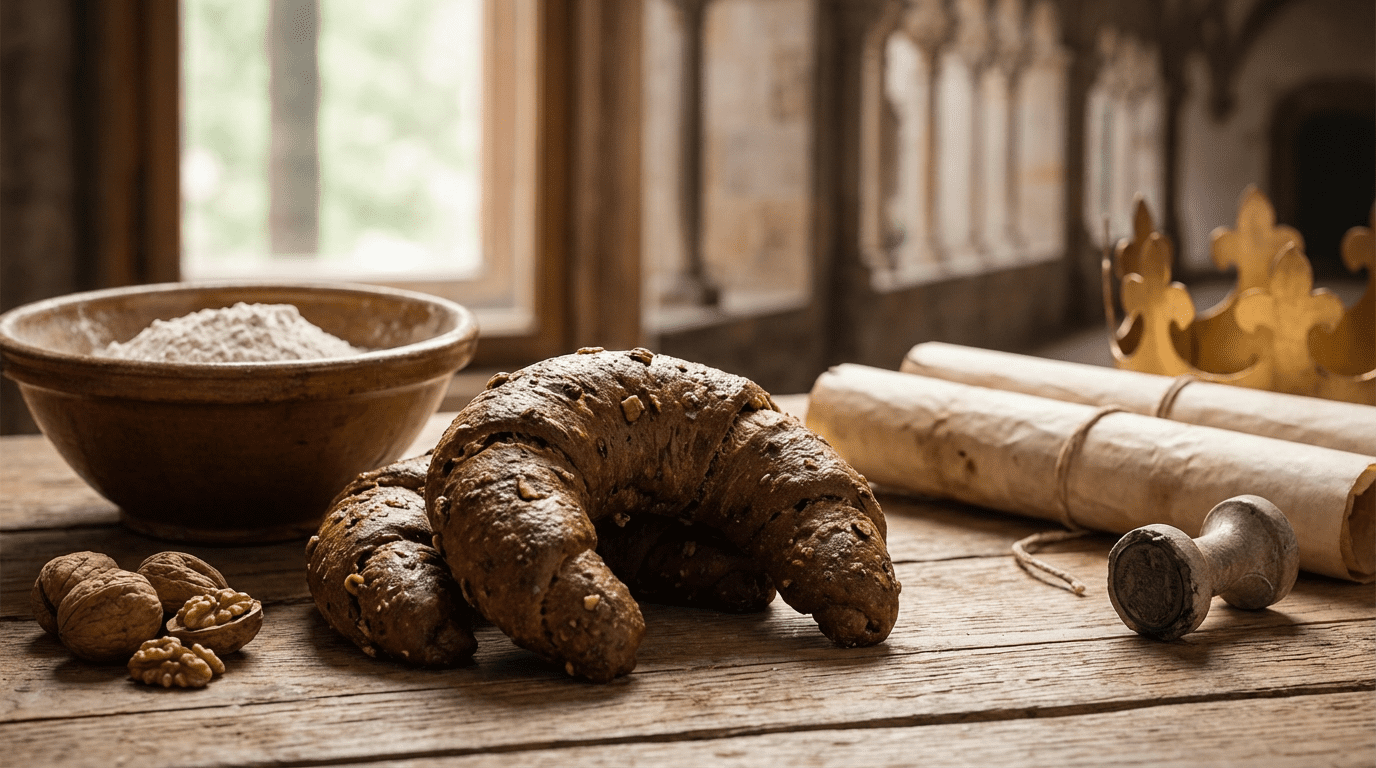
Before the croissant became a symbol of French elegance, its predecessor, the kipferl, was already a fixture in 13th-century Austria. Unlike the light, airy pastry we recognize today, these early versions were dense, brioche-like rolls often flavored with nuts or seeds. Local legends suggest the crescent shape was a commemorative gesture, though historical records show these curved breads were simply part of a long-standing tradition of festive baking in Viennese monasteries and royal courts.
The Evolution of the Modern Laminated Dough
While the shape was firmly established in France, the final transformation into a flaky marvel didn’t occur until Sylvain Claudius Goy revolutionized the recipe in 1915. He moved away from the heavy, bread-like consistency of the past and introduced the technique of laminating yeast dough with chilled butter. This labor-intensive process of folding and rolling creates the hundreds of distinct, paper-thin layers that define the modern aesthetic, a technique we meticulously preserve here in Dothan to achieve that perfect shatter-crisp crust.

The Anatomy of Perfection: Our Professional Standard
This intricate lamination process is the heartbeat of our bakery. To achieve the professional standard our customers expect, we manage temperature and timing with surgical precision, ensuring the chilled butter never melts into the dough before it hits the oven. This thermal control is what creates the “honeycomb” crumb structure, the airy, open interior that distinguishes a true artisan bake from a dense, bread-like imitation. Every fold is a commitment to the structural integrity and sensory experience of a world-class pastry.

Our Delicious Options: The Best in Dothan
Building upon these technical foundations, our menu showcases the versatility of well-crafted lamination. Beyond the classic butter version, our Almond Croissants are a local favorite! For those seeking a savory start to their morning, we offer varieties infused with regional ingredients, providing a gourmet alternative to standard breakfast fare. Each pastry is pulled from the oven at dawn to ensure the peak of freshness for our early-morning guests.
August Zang and the Rise of the Viennese Bakery
This transformation took root in 1838 when August Zang, an Austrian artillery officer turned entrepreneur, established Boulangerie Viennoise at 92 Rue de Richelieu. By introducing the crescent-shaped kipferl to the Parisian elite, Zang effectively birthed the “viennoiserie” category, a bridge between traditional bread and rich pastry. His bakery utilized high-grade Hungarian flour and steam-injection ovens, innovations that provided a refined sheen and texture previously unknown to local bakers, setting a new benchmark for French indulgence.
Celebrations Dothan: A Local Take on a Global Classic
Building upon these centuries of innovation, our kitchen honors the legacy of Goy and Zang by balancing time-honored lamination with high-quality regional ingredients. Our signature Almond Croissants represent the pinnacle of this journey. Whether you are stopping by for a morning ritual or seeking a sophisticated dessert, we invite you to taste the history of the craft. Visit us to experience how a global icon has found a dedicated home in the heart of Alabama.
Join Our Exclusive Pastry List
Mastering these technical layers is a feat of patience, and we invite you to go behind the scenes of our kitchen. By joining our community at Celebrations Dothan, you gain first access to seasonal releases and limited-edition bakes that showcase the versatility of our laminated dough. Our members receive curated insights into our baking schedule and exclusive invitations to tasting events, ensuring you never miss a fresh tray straight from the oven.
Frequently Asked Questions
Is the croissant originally from France?
While the modern flaky version is a French innovation, its structural predecessor was the Austrian crescent roll, which was imported to Paris and subsequently reimagined by local artisans.
What makes a croissant so flaky?
The secret lies in “tournage,” the process of repeatedly rolling and folding dough over a block of butter. When baked, the water in the butter turns to steam, puffing the layers apart before the fat fries the dough to a crisp.
What is a viennoiserie?
This category refers to “things from Vienna.” These are baked goods made from enriched doughs, often containing eggs, butter, and sugar, that are leavened with yeast, such as pain au chocolat and brioche.
Why the crescent shape?
The shape is a legacy of the original Austrian design. Today, French law dictates that only croissants made with 100% pure butter can be shaped into a straight form, while those made with other fats often retain the traditional curve.